RacingStatto: Building a horse-racing analytics platform end to end
A horse-racing analytics platform that brings historical form, within-race rankings, and combination scores into a searchable product. I built the platform end to end and lead its technical development.
01 / Problem & ownership
Bringing multi-dimensional racing form into a consistent, traceable intra-race comparison.
RacingStatto brings several aspects of racing form into a consistent comparison within each race. The product combines raw information, runner rankings, and combination scores so users can inspect the factors behind a comparison.
I built the platform end to end, including data processing, ranking logic, the web application, and membership features. The work involved connecting domain-specific scoring rules with a product that users could navigate and test.
Traditional racecards often present isolated, absolute statistics without calibration to that day's specific race conditions. RacingStatto normalizes every competitor against its opponents within the exact conditions of the race.
02 / How it works
From scheduled data collection to Next.js application delivery and membership access.
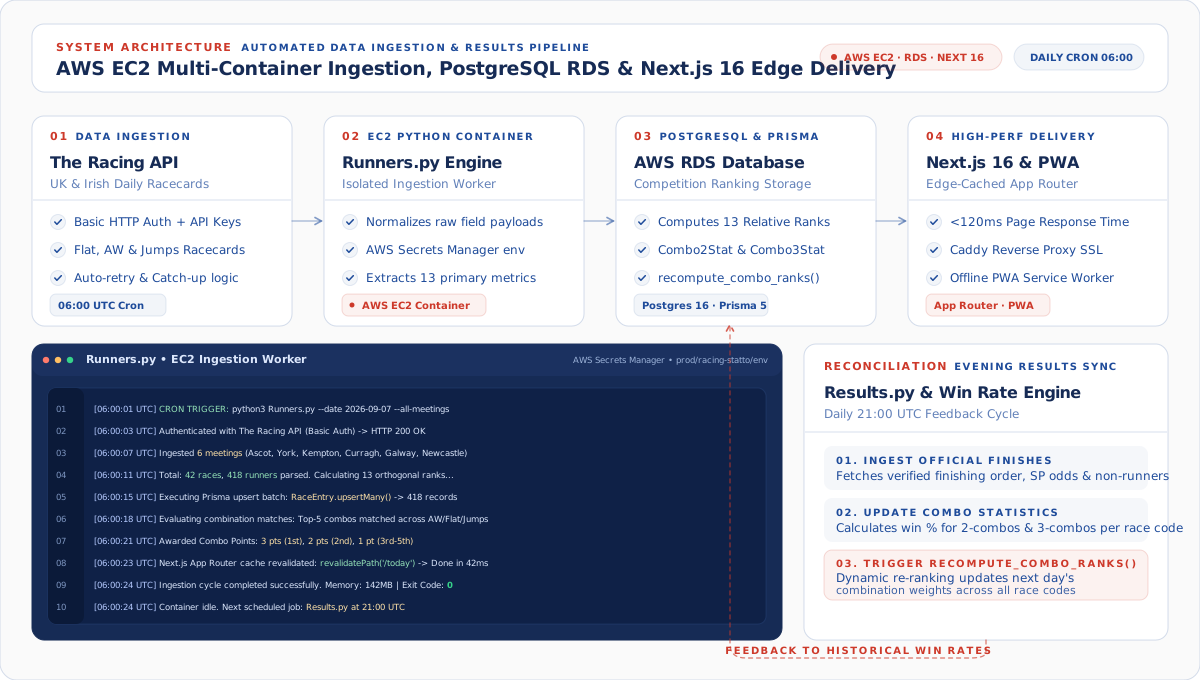
The data pipeline collects racecards and results, stores the information, and calculates the metrics used by the application.
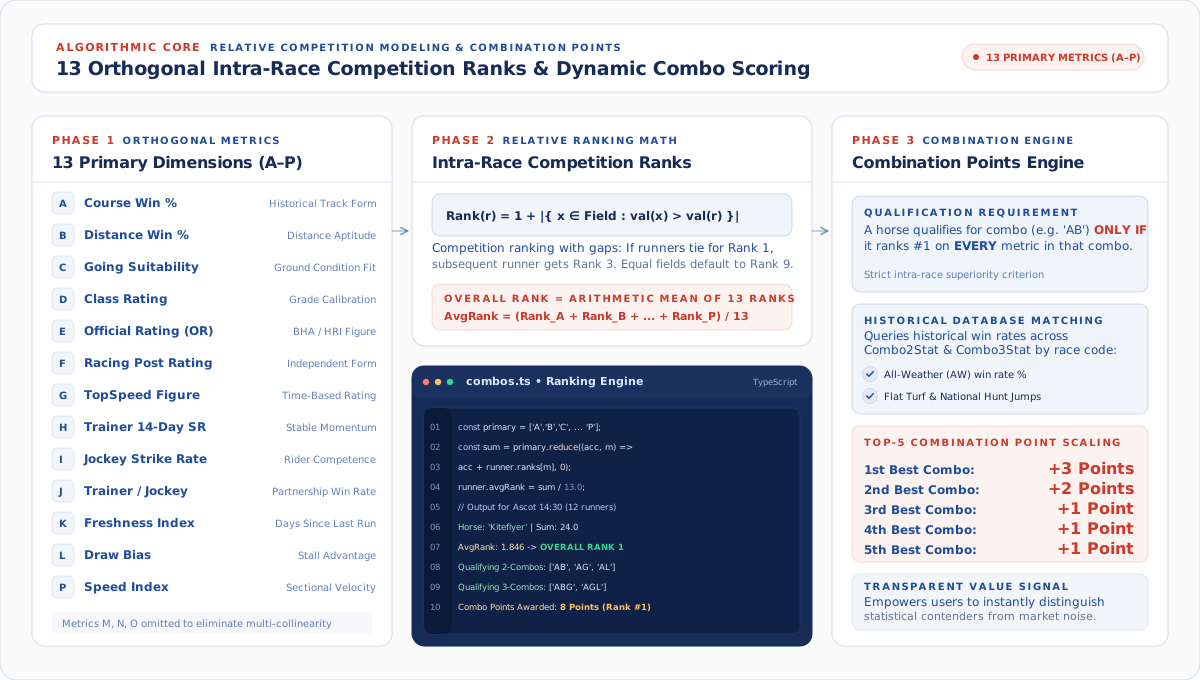
Each runner receives ranks across 13 primary metrics. An average of those ranks contributes to an overall ordering within the race. A separate combination engine awards points when a runner satisfies qualifying combinations of top-ranked metrics.
The web application presents these outputs alongside racecards, historical form, filtering, and membership access. Scheduled updates support the daily data workflow.
03 / Engineering decisions
Relative field rankings and separate combination scoring logic.
Relative rankings: Metrics are ranked within the current field. This provides a consistent way to compare runners across multiple dimensions, but the resulting rank is an ordinal score, not a win probability.
Separate aggregate and combination scores: The overall ranking summarises performance across the primary metrics. The combination score answers a different question: whether a runner leads on particular groups of metrics.
Explicit point allocation: Under the documented scoring rules, a runner qualifies for a combination only when it ranks first on every included metric. Qualifying combinations receive points according to their position in the selected combination table, using the sequence 3, 2, 1, 1, 1.
Illustrative worked scoring example: A runner ranking first on metrics A and B qualifies for combination AB. Ranking first on A but second on B does not qualify. When AB is the highest-ranked qualifying combination in its table, it contributes 3 points.
04 / Evidence & limitations
Current operational status and evaluation boundaries.
RacingStatto is live and in early user testing. The current outcome is a working product with end-to-end technical ownership, not established commercial traction.
Rankings and historical combination statistics explain the scoring system, but do not establish predictive accuracy or financial returns. Those claims would require a separate evaluation with clearly defined data and testing conditions.